
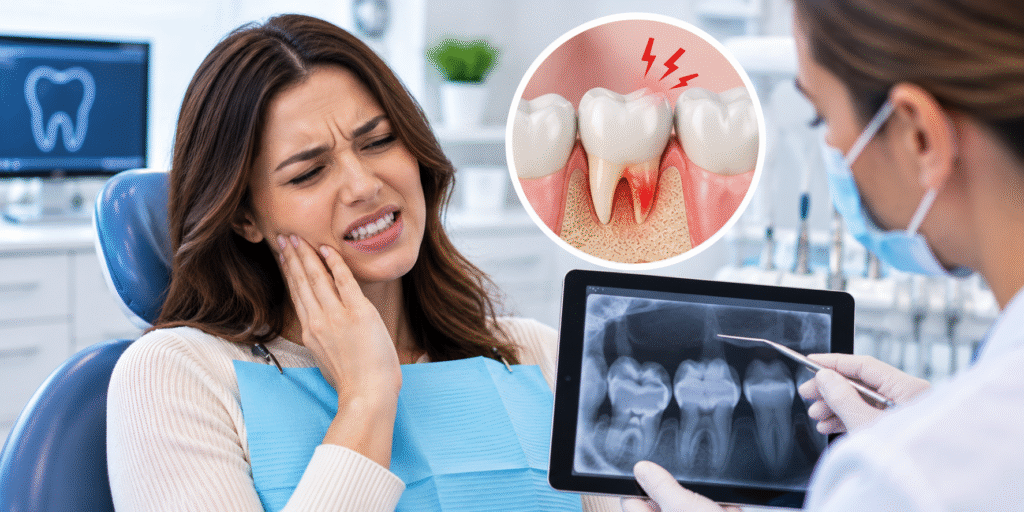
A tooth that hurts only when you bite down can be confusing.
You may feel completely fine when you’re sitting still, but the moment you chew on one side of your mouth, a sharp or uncomfortable pain appears.
This type of tooth pain should not be ignored, especially if it keeps happening. Pain when biting can be associated with several dental problems, including a cracked tooth, tooth decay, a damaged filling, or inflammation inside the tooth.
The cause cannot always be identified based on symptoms alone, so a dental examination may be necessary.
If you’re experiencing pain when biting down, here are seven possible reasons to visit a dentist in Holly Springs and what you should know about each one.
1. You May Have a Cracked Tooth
A cracked tooth is one of the more common reasons a tooth may hurt specifically when you bite down.
A crack can allow parts of the tooth to flex slightly under pressure. This can irritate the tissues inside the tooth and cause a sharp, sudden sensation when you chew. Some people notice the pain when biting down, while others feel it when they release their bite.
Cracked teeth can be difficult to identify because the pain may come and go. You may also have trouble identifying exactly which tooth is causing the problem.
A crack can result from an injury, normal wear over time, clenching or grinding, or repeated pressure on a weakened tooth. Teeth with large fillings may also have areas that are more vulnerable to fracture.
Treatment depends on the location and extent of the crack. A dentist may recommend a filling, crown, root canal treatment, or another approach depending on the condition of the tooth.
The important point is that a cracked tooth does not heal like a broken bone. Getting it evaluated can help determine whether the tooth can be protected and restored.
2. A Cavity May Have Reached Deeper Into the Tooth
Tooth decay does not always cause pain in its early stages.
As decay progresses deeper into the tooth, however, you may begin to notice discomfort when chewing. Pressure from biting can affect the damaged area and cause pain.
You might also experience:
- Sensitivity to cold or hot foods
- Sweet sensitivity
- Food getting caught in the area
- A visible dark spot or hole
- Occasional toothache
- Pain when chewing
Not everyone with a cavity experiences all of these symptoms. In fact, a tooth can have decay without causing noticeable pain.
If decay has weakened a significant portion of the tooth, a simple filling may not always be enough. Depending on how much healthy tooth structure remains, your dentist may discuss a restoration such as a crown.
An examination allows your dentist in Holly Springs to determine how extensive the decay is and which treatment is appropriate.
3. Your Filling May Be Damaged or the Bite May Need Adjustment
If your tooth started hurting when you bite down after receiving a filling, the restoration itself may be part of the problem.
A filling restores tooth structure after decay has been removed, but the restored tooth also needs to work properly with the teeth around it.
Sometimes a filling can be slightly higher than the surrounding bite. When you close your teeth together, that tooth may receive more pressure than it should, resulting in discomfort when chewing.
A filling can also become worn, loose, or damaged over time.
If the pain began after recent dental treatment, let your dentist know. A simple examination can help determine whether the filling needs adjustment or whether another issue is causing the pain.
Novel Dental provides tooth-colored fillings as part of its restorative care, along with crowns and other treatments for damaged teeth.
4. The Tooth May Have Inflammation Inside It
Inside every healthy tooth is a soft area called the pulp. It contains nerves and blood vessels.
Deep decay, cracks, trauma, or repeated dental procedures can irritate or damage the pulp. When this happens, tooth pain can become more noticeable.
Pain from inflammation inside the tooth may occur with biting, but it can also be accompanied by other symptoms such as sensitivity to hot or cold foods.
If the pulp becomes severely inflamed or infected, root canal treatment may be recommended to remove the damaged tissue, clean the inside of the tooth, and seal it.
That does not mean every tooth that hurts when you bite needs a root canal. Treatment depends on the actual cause of the pain and what your dentist finds during the examination.
5. Your Tooth Could Have an Infection
A dental infection can sometimes cause pain or pressure around a tooth.
You may notice that biting down makes the tooth feel tender or different from the teeth around it. Other symptoms can include swelling, a bad taste in the mouth, gum tenderness, or more persistent pain.
A dental abscess is one possible cause of severe tooth pain and pressure. According to the American Association of Endodontists, constant severe pain combined with swelling or sensitivity to touch can be associated with an abscessed tooth.
An infection requires professional evaluation. Antibiotics alone do not necessarily address the underlying source of a dental infection.
Depending on the condition of the tooth, treatment may involve root canal therapy, drainage, extraction, or another dental procedure.
If you have facial swelling, significant swelling in the mouth, difficulty breathing or swallowing, or rapidly worsening symptoms, seek urgent medical attention.
6. Grinding or Clenching May Be Putting Extra Pressure on the Tooth
Do you wake up with a sore jaw or notice that your teeth feel sensitive after a stressful day?
Clenching or grinding your teeth, also called bruxism, can put considerable pressure on individual teeth.
Over time, repeated pressure may contribute to tooth wear, cracks, sensitivity, and discomfort when chewing. You may not even realize you are grinding because it often happens during sleep.
Other signs can include:
- Morning jaw soreness
- Headaches around the temples
- Flattened or worn tooth surfaces
- Increased tooth sensitivity
- Tightness in the jaw
- Chipped or fractured teeth
If your dentist suspects that grinding or clenching is contributing to your symptoms, they can evaluate your bite and discuss appropriate options. In some situations, a custom mouthguard may be recommended to reduce damaging forces on the teeth.
Not every person with tooth pain has bruxism, so it is important to have the affected tooth evaluated rather than assuming grinding is the cause.
7. The Tooth May Have Been Injured
A tooth can sometimes become painful when biting after an injury, even when there is no obvious chip or break.
For example, you might have bitten something unexpectedly hard, received a blow to the mouth, or experienced an accident that affected the tooth.
Dental injuries can affect the outer tooth structure, the tissues supporting the tooth, or the pulp inside it. Sometimes the injury is subtle and cannot be identified simply by looking at the tooth.
If you recently experienced dental trauma and now have pain when biting, schedule an evaluation rather than waiting to see whether it disappears.
Why Does a Tooth Hurt When You Bite but Not When You’re Resting?
This happens because biting puts pressure on structures that may not be irritated enough to cause pain at rest.
For example, a crack can cause movement within the tooth when chewing. A damaged filling may change how pressure is distributed across the tooth. Inflammation around the root can also make a tooth sensitive to pressure.
This is why the specific pattern of your pain can provide useful information to your dentist.
Pay attention to what happens when you bite:
- Does the pain happen when you bite down?
- Does it hurt more when you release your bite?
- Is the pain sharp or dull?
- Does cold or heat also cause discomfort?
- Did the pain begin after dental treatment?
- Have you recently injured the tooth?
- Is the pain getting worse?
These details can help your dental team investigate the cause.
Does Pain When Biting Mean I Need a Root Canal?
Not necessarily.
Pain when biting can have several causes, and root canal therapy is only appropriate for certain conditions involving the pulp inside the tooth.
A cracked tooth, cavity, damaged filling, bite issue, trauma, or infection may require different treatments.
If the pulp has become irreversibly inflamed or infected, root canal therapy may be recommended to remove the damaged pulp and preserve the tooth when possible.
The important thing is to avoid diagnosing yourself based on one symptom.
Your dentist may use a combination of an examination, dental X-rays, bite tests, temperature testing, and other diagnostic methods to determine what is happening.
When Should You See a Dentist for Pain When Biting?
If the pain happens repeatedly, it is worth getting checked.
You should especially arrange an appointment if:
- The pain has lasted more than a few days
- The discomfort is becoming more frequent
- You have sensitivity to hot or cold
- You notice a crack or chip
- A filling or crown feels loose
- The tooth is painful to touch
- Your gums are swollen or tender
- You have a bad taste or drainage
- You recently injured the tooth
You do not need to wait until the pain becomes severe before seeking dental care. Ongoing tooth pain is a reason to have the area evaluated.
What Can You Do Until Your Appointment?
If you are waiting for a dental appointment, try to avoid chewing directly on the painful tooth.
Depending on your situation, you may find it more comfortable to:
- Choose softer foods temporarily
- Chew on the opposite side of your mouth
- Avoid extremely hot or cold foods if they trigger pain
- Continue brushing and cleaning your teeth gently
- Avoid chewing ice, hard candy, pens, or other hard objects
- Follow appropriate over-the-counter pain medication directions if you can safely take those medications
Do not place aspirin directly against the tooth or gums. If you are unsure which pain-relief medication is appropriate for you, ask a healthcare professional or pharmacist.
The goal is temporary comfort while you arrange appropriate dental care, not to mask a problem indefinitely.
How Does a Dentist Find the Cause of Bite Pain?
Finding the source of bite pain can sometimes require more than simply looking at the tooth.
Your dentist may ask about when the pain started, what triggers it, and whether anything makes it better or worse.
The examination may include checking:
- The tooth for visible cracks or damage
- Existing fillings, crowns, or other restorations
- The way your upper and lower teeth meet
- The gums around the tooth
- The tooth’s response to pressure
- Sensitivity to temperature
- Signs of infection or inflammation
- X-rays or other imaging when appropriate
Cracked teeth can be particularly challenging to diagnose because the crack may not always be visible on a routine X-ray.
A clinical examination and other diagnostic tests may therefore be important.
Can You Prevent Tooth Pain When Biting?
You cannot prevent every dental problem, but several habits can reduce your risk of tooth damage.
Regular dental examinations can help identify decay, worn restorations, gum problems, and other concerns before they become more complicated.
At home, focus on the basics:
- Brush twice daily with fluoride toothpaste
- Clean between your teeth regularly
- Avoid chewing hard objects such as ice
- Wear appropriate protective equipment for contact sports
- Tell your dentist if you grind or clench your teeth
- Do not ignore persistent tooth sensitivity or pain
- Keep up with recommended dental appointments
Preventive care does not eliminate every dental problem, but early evaluation can make it easier to identify and manage issues before they progress.
Frequently Asked Questions
Why does my tooth hurt when I bite down but not otherwise?
Pain only during biting can be associated with a cracked tooth, decay, a damaged filling, inflammation inside the tooth, infection, trauma, or excessive pressure from grinding or clenching. An examination is needed to determine the cause.
Why does my tooth hurt when I release my bite?
Pain when releasing pressure can occur with certain types of cracked teeth. However, this symptom alone cannot confirm a crack. Your dentist will need to evaluate the tooth and surrounding structures.
Can a cavity cause pain when biting?
Yes. A cavity that has progressed deeper into the tooth can cause discomfort when chewing. Other conditions can cause similar symptoms, so an examination is important.
Can a cracked tooth heal on its own?
A true crack in a tooth does not heal like a broken bone. Treatment depends on the type, location, and extent of the crack.
Should I avoid chewing on the painful tooth?
Until you know what is causing the pain, avoiding unnecessary pressure on the affected tooth is reasonable. Choose softer foods and chew on the opposite side temporarily.
Does tooth pain when biting always mean an emergency?
Not always. However, persistent or worsening pain deserves dental attention. Severe pain, swelling, signs of infection, or significant dental trauma should be evaluated promptly.
Don’t Ignore a Tooth That Hurts When You Bite
Pain that appears only when you bite down can have a surprisingly wide range of causes. It may be something relatively straightforward, such as a filling that needs adjustment, or it may indicate a cracked tooth, deeper decay, inflammation, or infection.
The only way to know what is causing the discomfort is to have the tooth properly evaluated.
If you’re experiencing persistent bite pain in Holly Springs, Novel Dental can assess the affected tooth and help determine the appropriate next step.
At Novel Dental, we understand that persistent bite pain can make everyday activities like eating and speaking uncomfortable.
Our team takes the time to identify the underlying cause using advanced diagnostics and a thorough evaluation before recommending the most appropriate treatment.
Whether you need a filling, crown, root canal therapy, or another restorative solution, we focus on relieving discomfort, preserving your natural tooth whenever possible, and providing gentle, personalized care that supports your long-term oral health.
Take control of your oral health with compassionate, personalized care from the dentist in Holly Springs at Novel Dental.