

Missing teeth affect more than your smile. They can make eating difficult, change the way you speak, and even impact your oral health over time. Whether you’ve lost a tooth because of injury, decay, or gum disease, finding a reliable replacement can help restore both function and confidence.
Dental implants have become one of the most effective options for replacing missing teeth because they are designed to function much like natural tooth roots. If you’re considering dental implants in Holly Springs, understanding how they work and what to expect can help you make an informed decision.
What Are Dental Implants?
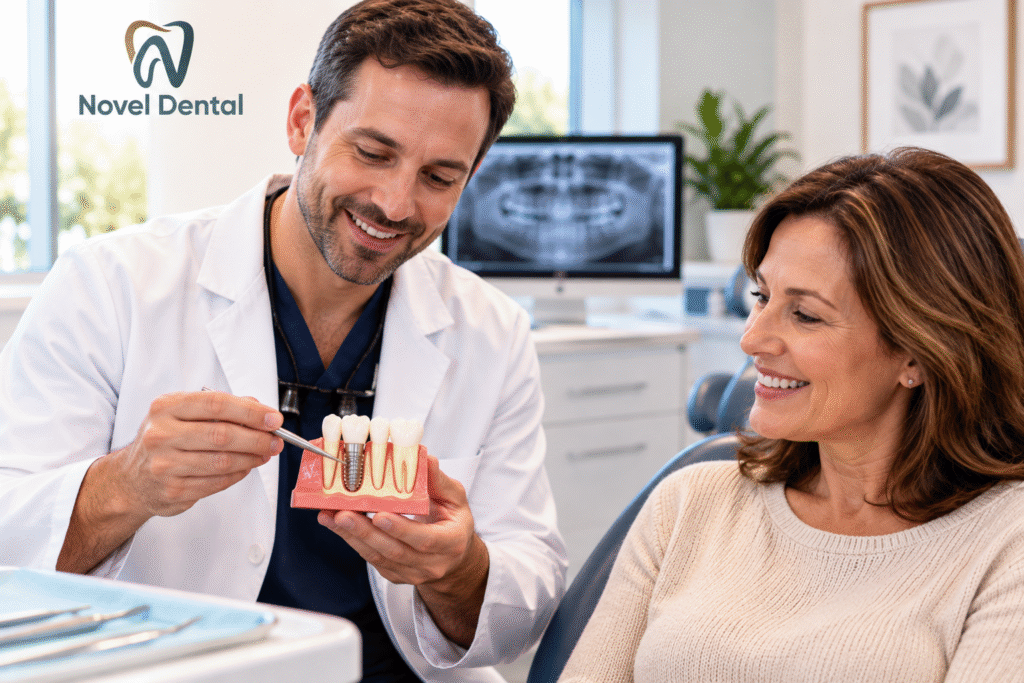
A dental implant is a small titanium post that is surgically placed into the jawbone to replace the root of a missing tooth. After the implant bonds with the bone during healing, a custom restoration such as a crown, bridge, or denture is attached.
A complete dental implant restoration typically includes:
- The implant post
- An abutment that connects the restoration
- A custom-made dental crown, bridge, or denture
Together, these components create a stable replacement that closely resembles a natural tooth.
Why Replacing Missing Teeth Matters
Even a single missing tooth can affect your oral health.
Without a tooth root, the jawbone no longer receives the stimulation it needs during chewing. Over time, this can lead to bone loss. Nearby teeth may also begin shifting into the empty space, which can affect your bite and make cleaning more difficult.
Replacing missing teeth can help:
- Restore chewing ability
- Improve speech
- Support facial structure
- Reduce shifting of neighboring teeth
- Improve confidence when smiling
Why Many Patients Choose Dental Implants
Dental implants offer several advantages compared to traditional tooth replacement options.
Natural Appearance
Implant-supported restorations are designed to match the size, shape, and color of surrounding teeth, helping them blend naturally into your smile.
Strong Stability
Unlike removable dentures, implants are anchored into the jawbone, providing excellent stability while eating and speaking.
Bone Preservation
Because implants replace the tooth root, they help stimulate the jawbone and may reduce the bone loss that often follows tooth loss.
Long-Term Durability
With proper home care and regular dental visits, dental implants can remain functional for many years.
No Impact on Adjacent Teeth
Unlike traditional bridges, dental implants generally do not require neighboring healthy teeth to be altered for support.
Who May Be a Good Candidate for Dental Implants?
Many adults with missing teeth may qualify for implant treatment.
A dental evaluation typically considers:
- Overall oral health
- Healthy gums
- Adequate jawbone volume
- Medical history
- Tobacco use
- Oral hygiene habits
If bone loss has occurred, additional procedures such as bone grafting may be recommended before implant placement.
Because every patient is different, treatment recommendations are individualized.
Conditions Dental Implants Can Treat
Dental implants can replace:
One Missing Tooth
A single implant topped with a custom crown can replace one missing tooth without affecting nearby teeth.
Multiple Missing Teeth
Several implants may support implant bridges when multiple teeth are missing.
Full-Arch Tooth Replacement
For patients missing all teeth in an upper or lower arch, strategically placed implants can support a full-arch prosthesis that offers improved stability compared to traditional removable dentures.
The Dental Implant Process
Treatment occurs over several stages.
Comprehensive Examination
Your dentist begins with a thorough evaluation that may include digital imaging to assess bone quality and determine implant placement.
A personalized treatment plan is then created.
Implant Placement
The titanium implant is placed into the jawbone during a minor surgical procedure.
Healing begins immediately afterward.
Osseointegration
Over the next several months, the implant gradually fuses with the jawbone through a natural process called osseointegration.
This creates a stable foundation for the replacement tooth.
Restoration Placement
Once healing is complete, an abutment and custom restoration are attached to complete the treatment.
How Long Does Recovery Take?
Recovery varies from person to person.
Many patients experience mild discomfort, swelling, or tenderness for several days after implant placement.
Healing instructions commonly include:
- Eating softer foods initially
- Keeping the surgical area clean
- Taking prescribed medications if needed
- Attending follow-up appointments
Although initial recovery is relatively short, complete integration between the implant and jawbone takes several months.
Caring for Dental Implants
Dental implants require daily care similar to natural teeth.
Good habits include:
- Brushing twice daily
- Flossing around implants
- Attending routine professional cleanings
- Avoiding tobacco whenever possible
- Wearing a nightguard if recommended for teeth grinding
Consistent maintenance helps support long-term implant health.
Dental Implants Compared With Other Tooth Replacement Options
| Option | Dental Implant | Dental Bridge | Removable Denture |
| Replaces tooth root | Yes | No | No |
| Helps preserve bone | Yes | No | Limited |
| Fixed in place | Yes | Yes | No |
| May affect adjacent teeth | No | Often | No |
| Removable | No | No | Yes |
Each option has advantages depending on your oral health, goals, and clinical needs.
Common Questions About Dental Implants
Are dental implants painful?
Most patients report that implant placement is more comfortable than expected. Local anesthesia is used during the procedure, and any postoperative discomfort is typically manageable.
How long do dental implants last?
With good oral hygiene and routine dental care, implants can remain functional for many years. Individual outcomes vary.
Can older adults get dental implants?
Age alone does not determine candidacy. Overall health, bone quality, and oral health are generally more important considerations.
What if I don’t have enough bone?
Some patients may benefit from bone grafting before implant placement. Your dentist can determine whether additional treatment is appropriate.
How long does the entire process take?
Treatment timelines vary depending on healing and whether additional procedures are needed. Many cases take several months from implant placement to the final restoration.
When Should You Consider Dental Implants?
You may want to schedule an evaluation if you:
- Have one or more missing teeth
- Are unhappy with loose dentures
- Want a fixed replacement option
- Have difficulty chewing comfortably
- Wish to preserve long-term oral function
A comprehensive consultation can help determine which tooth replacement option best fits your needs.
Conclusion
Dental implants offer a reliable way to replace missing teeth while restoring appearance, function, and confidence. Because they replace both the visible tooth and its root, they provide benefits that extend beyond aesthetics alone.
If you’re exploring options for replacing missing teeth, learning about dental implants is an excellent first step toward making an informed decision.
Considering Dental Implants?
If you’re looking for dental implants in Holly Springs, the team at Novel Dental provides personalized evaluations to determine whether implant treatment is appropriate for your needs. Every treatment plan is tailored to your oral health goals, helping you understand your options and make confident decisions about your smile.